Home › Tuckpointing and Repointing
Superior Masonry Ann Arbor provides tuckpointing and repointing in Ann Arbor, MI to restore failing mortar joints before they cause major masonry damage. We carefully remove loose mortar, match the color and texture, and refill joints for a clean, watertight repair. Our mortar joint repair extends the life of chimneys, brick walls, and foundations while improving appearance.
Superior Masonry Ann Arbor provides professional tuckpointing throughout Ann Arbor, MI, Michigan and the surrounding area. Our licensed, insured crew delivers safe, clean, on-time work with a free estimate before anything begins. Call (734) 887-9416 or request your free quote.
Tuckpointing and Repointing for Ann Arbor Brickwork
Mortar is the weak link in brick construction, especially in a freeze‑thaw climate like Ann Arbor. When it fails, water gets in, bricks crack or spall, and walls can start to shift. Tuckpointing and repointing are how we stop that damage, restore strength, and keep your brick looking clean instead of patchy and crumbling.
Superior Masonry Ann Arbor focuses on methodical, detail‑driven tuckpointing. We inspect every wall, chimney, or porch on site, identify where mortar has failed, and match new mortar to your existing brick and joints. The goal is not just to fill gaps. It is to rebuild the joints so they shed water properly and hold up to Michigan winters.
Whether you have a 1920s brick home near campus or a newer subdivision build, the process and materials we choose will be tailored to your property. Older houses often need softer lime‑based mortars so the brick does not get overstressed. Newer masonry usually calls for stronger Portland‑cement blends. We explain these choices before any work starts so you know exactly what is going back into your walls.
How Professional Tuckpointing Is Actually Done
Quality tuckpointing is slow and controlled, not a quick smear of new mortar. A typical project with Superior Masonry Ann Arbor follows a clear sequence so you understand what is happening at each stage.
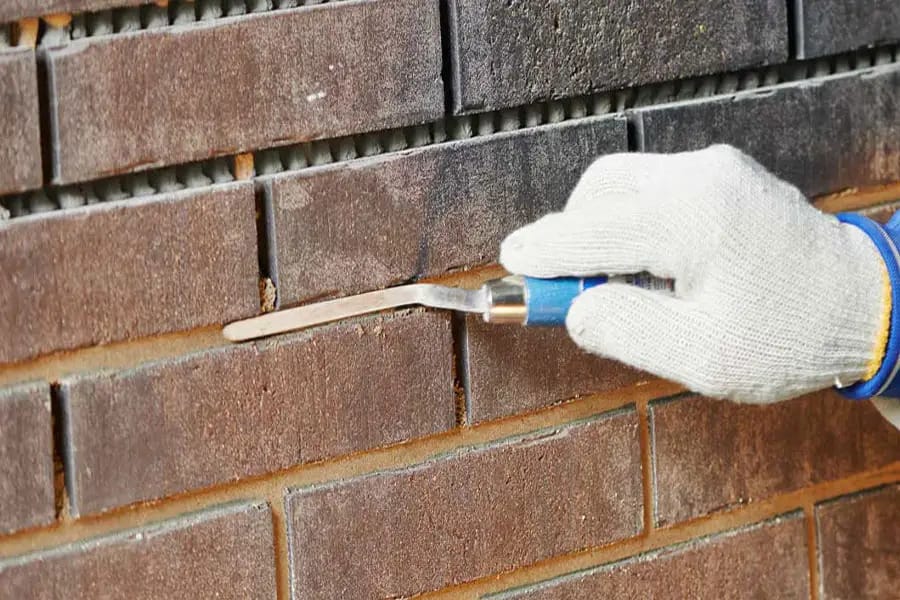
First, we remove failed mortar. We use grinders with masonry blades or hand chisels set to a specific depth, usually about 2 to 2.5 times the joint width, to avoid loosening the brick. We never overcut or damage the edges of the brick units. For historic walls, we often use hand tools only, which takes longer but protects softer brick.
Second, we clean out the joints. All dust and loose material are brushed and blown out, and sometimes rinsed with water, so new mortar can bond directly to solid masonry. Skipping this step leads to new mortar de-bonding in the first few winters.
Third, we mix the new mortar to match strength, color, and texture. We can produce test batches right at your property to compare against your existing joints in both wet and dry states. This includes adjusting sand gradation, cement type, and pigments when needed.
Fourth, we pack and tool the new mortar. Mortar is pressed firmly into the joint in layers, compacted to eliminate voids, then tooled to the existing joint profile (concave, flush, weathered, grapevine, or other). Proper tooling seals the surface, compacts the mortar, and directly affects how long your repointing will last.
Finally, we clean the work area using non‑acid cleaners or low‑pressure washing when appropriate. For sensitive or older brick, we rely on light brushing to avoid etching the surface.
Repointing vs Tuckpointing: What You Are Actually Buying
Many homeowners in Ann Arbor hear both terms and assume they are identical. In practice, they refer to related but slightly different tasks, and knowing the difference helps you understand your estimate.
Repointing is the structural work. It is the removal of deteriorated mortar and the installation of new mortar in the joints. The aim is to restore the bond between brick units, stop water penetration, and stabilize walls, chimneys, and foundations.
Tuckpointing, in its traditional sense, is a technique used to create the appearance of very fine joints. It involves using a mortar that closely matches the color of the brick, then adding a thin contrasting line of mortar along the center of the joint. In modern everyday use, people often say tuckpointing when they really mean repointing with close color matching and clean joint lines.
Superior Masonry Ann Arbor will clarify on site whether your project is strictly structural repointing, cosmetic tuckpointing, or both. For most Ann Arbor homes, we focus on structurally sound repointing with careful color and joint‑profile matching so patched zones do not stand out across the wall.
Local Conditions in Ann Arbor That Affect Tuckpointing
Ann Arbor’s climate is tough on mortar joints. Cycles of thaw and refreeze, lake‑effect moisture, and deicing salts on steps and porch caps accelerate joint failure. Planning your tuckpointing around these realities is critical if you want the work to last more than a few seasons.
We avoid major tuckpointing in the coldest months unless we can fully tent and heat the work area, since fresh mortar needs stable temperatures above freezing and controlled moisture to cure properly. For most homeowners, the practical working season in Ann Arbor is mid spring through late fall, with summer being ideal because we can better manage curing times.
We also take exposure into account. South and west facing walls may show more sun‑driven expansion and hairline cracking, while north walls and shaded chimneys often hold moisture longer and deteriorate from slow freeze‑thaw cycles. For areas exposed to road salt, such as front steps or retaining walls close to the street, we adjust the mortar blend and joint profile to resist salt intrusion.
During our site visit, we point out drainage and water management issues that affect your mortar lifespan, such as missing chimney caps, clogged gutters that dump water onto brick, or grade lines where soil traps moisture against foundation walls. Addressing those items often matters as much as the tuckpointing itself.
What Drives Tuckpointing Cost and Scope
Tuckpointing costs in Ann Arbor are driven by several concrete factors, not just square footage. Understanding these helps you interpret proposals and spot low bids that may cut corners.
Access is a major cost driver. Chimneys above the roofline, second‑story walls, and lakefront homes with tricky terrain need staging, roof brackets, or scaffolding. That adds time to setup and teardown. Ground‑level garden walls and porch steps are less expensive per linear foot because they are simpler to reach.
Depth and severity of deterioration matter as well. Hairline cracks and shallow erosion may only require standard joint raking and repointing. Deep voids, missing bricks, or bulging walls add extra labor and sometimes brick replacement, lintel repair, or rebuilding sections before we even start repointing.
Material matching plays a role in price. Custom color matching and historic mortar formulations require more testing and labor than basic gray mortar. On older Ann Arbor homes, especially near Kerrytown or the Old West Side, we often specify lime‑rich mortars and careful joint profiles to preserve architectural character.
Superior Masonry Ann Arbor provides written proposals that break down the scope. You will see which walls or faces are included, which joints are targeted, whether brick replacement is included, how access will be handled, and what materials are planned. This level of detail protects you from vague quotes that turn into unexpected extras later.
What Ann Arbor Homeowners Should Check Before Hiring
Before you hire anyone for tuckpointing or repointing in Ann Arbor, a few targeted questions and checks will help you avoid costly mistakes.
Ask how they remove mortar and to what depth. If the answer is simply “we grind out the joints” without mentioning depth control or hand tools near fragile brick, that is a concern. Over‑grinding can chip brick edges and permanently scar your walls.
Ask how they select mortar. A reliable contractor will talk about matching strength to your brick, not just using the hardest mix available. On older brick homes, mortar that is too strong can cause bricks to crack instead of the joint absorbing movement.
Check that they understand local seasons. Anyone scheduling large tuckpointing jobs in the middle of a typical Ann Arbor cold snap without mention of protection, tenting, or heat is putting your project at risk. Mortar that freezes before it cures loses strength and will start failing early.
Review examples of past work on similar properties. Superior Masonry Ann Arbor can show you completed projects on Ann Arbor homes and small commercial buildings, including close‑up photos of joints and before‑and‑after shots. Look for even joint depths, uniform tooling, minimal smearing on brick faces, and a sensible color match.
Finally, ask about cleanup and protection. We cover landscaping, keep dust under control as much as the tools allow, and clean brick surfaces carefully so they are not etched or streaked. When we leave, you should see solid, well‑tooled joints and intact brick, not grind marks and mortar haze.