Home › Brick Veneer Installation
Superior Masonry Ann Arbor installs high quality brick veneers in Ann Arbor, MI that give your home the look of full brick at a lower cost and weight. We carefully attach brick veneer siding and thin brick veneer systems for durable, attractive façades. Our team focuses on proper flashing and support so your new brick cladding performs for years.
Superior Masonry Ann Arbor provides professional brick veneers throughout Ann Arbor, MI, Michigan and the surrounding area. Our licensed, insured crew delivers safe, clean, on-time work with a free estimate before anything begins. Call (734) 887-9416 or request your free quote.
Brick veneer options that fit Ann Arbor homes and budgets
Brick veneers are a smart way to get the look of full brick without the weight and structural changes that solid masonry requires. At Superior Masonry Ann Arbor, we install thin brick and brick panel systems on both existing homes and new construction throughout Ann Arbor and nearby communities.
You can choose from clay thin brick, manufactured thin brick, or brick veneer panels. Clay thin brick is cut from real brick, so you get authentic color variation and texture. Manufactured thin brick is molded concrete colored to look like brick and can be more budget friendly. Panel systems combine thin brick with a metal or foam-backed panel that speeds up installation and can help with insulation.
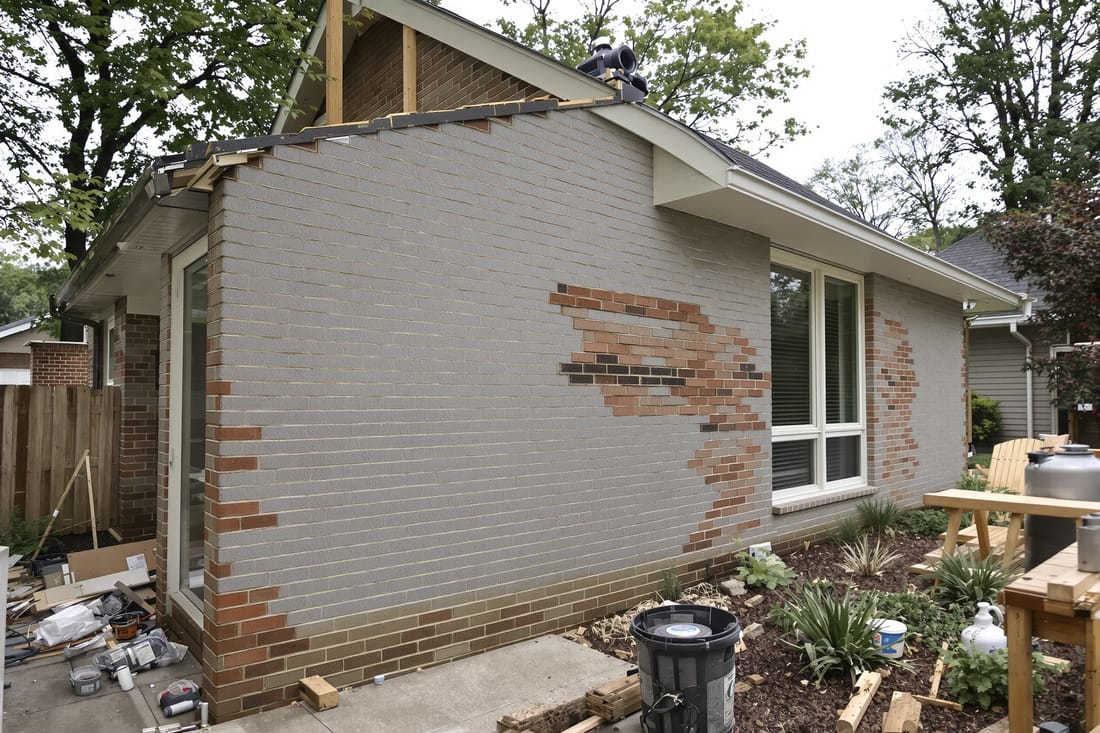
Common styles our Ann Arbor customers ask for include traditional red to match 1950s and 1960s homes, tumbled brick for older neighborhoods near Downtown and Kerrytown, and sleek, uniform brick for newer builds in townships around Ann Arbor. We can blend brick colors to transition from existing masonry to new veneer so additions or new walls do not look like a patch.
For interior projects, like fireplace surrounds or accent walls in basements and living rooms, we often recommend thinner profiles to save space and lighter color blends that work with modern paint schemes. For exteriors, especially in areas that see road salt splash or heavy snow, we usually suggest denser units and mortar that stand up to Michigan freeze and thaw cycles.
How our brick veneer installation process actually works
A good brick veneer job starts long before the first brick goes on the wall. When you call Superior Masonry Ann Arbor, we begin with a site visit to look at your existing wall structure, siding, or foundation. For a house in Ann Arbor, that might mean checking older wood framing, block basement walls, or existing brick that you want to cover or extend.
We first make sure the wall is sound and reasonably straight. Any rotten sheathing, loose siding, or damaged masonry is repaired or replaced. Next, we install the moisture management layers. On framed walls this usually means a weather resistant barrier, metal lath or a panel system, and properly detailed flashing at windows, doors, and at the bottom of the wall. We also plan weep locations so water that gets behind the veneer can drain out instead of soaking into the structure.
Once the base is ready, we apply a scratch coat for traditional thin brick, then set each brick piece in mortar by hand, using spacers or story poles to keep joints consistent. With panel systems, we fasten the panels to studs or masonry with the correct fasteners for Michigan code and the specific product, then lock in the brick pieces according to the manufacturer specification.
Joint tooling and cleanup are the last critical steps. After the mortar has set to the right hardness, we tool the joints to the profile you chose, such as concave or flush, which affects both appearance and water shedding. Then we carefully brush and wash the face of the brick so you see the real color instead of construction dust. On exterior work we do a final inspection of flashing, caulking around openings, and weep locations before we leave, so you are not left with hidden problems that show up in the next snow season.
What affects the cost of brick veneers in Ann Arbor
Brick veneer installation is usually less expensive than full brick, but the price can still vary a lot based on the details of your project. Superior Masonry Ann Arbor is always straightforward about where your money is actually going.
Square footage is the starting point, but it is not the only driver. Complex walls with lots of corners, windows, arches, or bump outs take more layout time and cutting. A flat, open wall like a simple garage front is faster and more economical per square foot than a front elevation with multiple gables, bay windows, and recessed entries.
Material choice has a real impact too. Authentic clay thin brick or custom color blends usually cost more than standard manufactured thin brick. Some customers in older Ann Arbor neighborhoods want us to match a specific existing brick, which can require special-order materials and sometimes a small premium. Panel systems can reduce labor on larger projects but may have a higher material cost.
Substrate and prep work are another cost factor. Attaching brick veneer over existing brick or block is usually more straightforward than going over old wood siding that needs repairs, added sheathing, and new weather barrier. If we find moisture damage, moldy insulation, or bowed walls during the inspection, we will discuss repair options with you before we proceed so there are no surprise charges.
Seasonal timing plays a role in Michigan. In winter we often need cold weather additives, tenting, or heating to keep mortar curing correctly. That adds some cost but prevents weak or powdery joints that can fail early. We always explain when scheduling and weather might affect pricing, then let you decide the best time to move forward.
Local issues we design brick veneers to handle
Ann Arbor weather is hard on exterior walls. Brick veneers that look fine in a warm climate can fail quickly if they are not detailed correctly for freeze and thaw, wind-driven rain, and road salt. At Superior Masonry Ann Arbor we build every veneer with local conditions in mind.
Improper drainage is one of the most common problems we see. Homeowners call us because brick pieces are popping off or mortar is crumbling along the bottom of the wall. Often the original installer skipped weep paths or used the wrong type of flashing. When we redo or extend an existing veneer, we look carefully at how water is getting in and redesign the base details so moisture has a way out.
We also pay close attention to expansion joints and transitions. Brick and framing move differently as temperatures shift. If there is no room for that movement, the veneer can crack at corners, window heads, or long runs. We plan expansion joints in longer walls and use flexible sealants at critical spots, which reduces the chance of visible cracking a few winters down the road.
In older Ann Arbor homes, especially near campus or in tree-lined neighborhoods, we often find previous DIY veneer jobs that were bonded directly to painted block or over old stucco using an adhesive only. These sometimes start to debond after several years of moisture and frost. When we repair these, we strip back to a sound surface, add mechanical attachment like lath or anchors, and rebuild the veneer so it is locked in place instead of just glued.
For basements and interior walls, we watch for moisture from the inside. If your basement has ever had water intrusion, we will recommend addressing that first or adding vapor management measures so the brick veneer does not trap moisture against the wall and cause musty smells or efflorescence.
What to know before you hire a brick veneer installer
Choosing the right contractor for brick veneers is as important as choosing the right brick. Before you sign with anyone in Ann Arbor, there are a few things Superior Masonry Ann Arbor suggests you check.
First, confirm that the company does brick veneer regularly, not just general handyman work. Ask to see local projects that are at least a few years old, ideally through different seasons. Long-term performance in Michigan weather tells you more than a fresh job that has not seen a winter yet.
Second, ask specific questions about moisture management. A qualified installer should be able to explain where the water-resistive barrier will be, how they are handling flashings at windows, doors, and roof intersections, and where water will drain out. If they cannot describe this clearly, that is a red flag.
Third, review how they handle layout and aesthetic details. Brick veneers are all about appearance. Your contractor should talk with you about joint width, joint profile, bond pattern, and how they will treat transitions to siding, stone, or existing brick. For example, we often mock up a small sample section on your property, so you can see the brick, mortar color, and joint style together before the whole wall is done.
Finally, make sure you understand the written scope. This should list what surface prep is included, whether damaged sheathing or framing repairs are covered or will be an extra, which specific brick and mortar products will be used, and what is covered under warranty. At Superior Masonry Ann Arbor we spell this out in plain language so you know exactly what to expect in terms of cost, timeline, and long-term performance.