Home › Commercial Tuckpointing and Masonry Repair
Superior Masonry Ann Arbor offers commercial tuckpointing in Ann Arbor, MI to extend the life of brick and block building envelopes. We restore failing mortar joints, replace damaged units, and reseal parapets to stop water intrusion. Our commercial masonry repair work is completed with lift or scaffold access and careful dust control for occupied facilities.
Superior Masonry Ann Arbor provides professional commercial tuckpointing throughout Ann Arbor, MI, Michigan and the surrounding area. Our licensed, insured crew delivers safe, clean, on-time work with a free estimate before anything begins. Call (734) 887-9416 or request your free quote.
Commercial Tuckpointing in Ann Arbor: What It Really Involves
Commercial tuckpointing is more than “freshening up” mortar joints. It is a structural repair that protects your brick building from water, freeze–thaw damage, and costly interior problems. At Superior Masonry Ann Arbor, we start by walking the entire property with you, usually focusing on the worst exposure sides first (often west and north walls in Ann Arbor because of prevailing winds and winter weather).
We inspect mortar joints with hand tools and a scope, checking depth, hardness, and bond. Crumbling joints, hairline stair-step cracks, and gaps at window heads or parapet caps are flagged as priorities. We also look for salt staining (efflorescence) from winter de-icing, which is common around commercial sidewalks and loading zones in Michigan, because it tells us where moisture is moving through the wall.
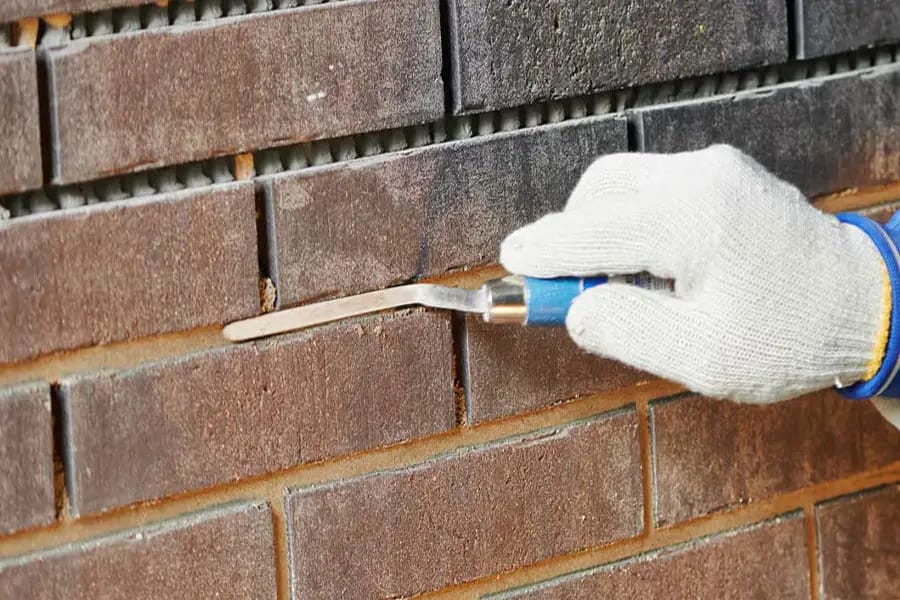
For true tuckpointing, we grind or rake out the deteriorated mortar to a proper depth, usually 2 to 2.5 times the width of the joint. This step is critical. Shallow “scratch and fill” work may look decent for a season, but it will not last through Ann Arbor’s freeze–thaw cycles. We use dust-controlled grinders with vacuum attachments, which is important for occupied buildings like offices, schools, and retail spaces.
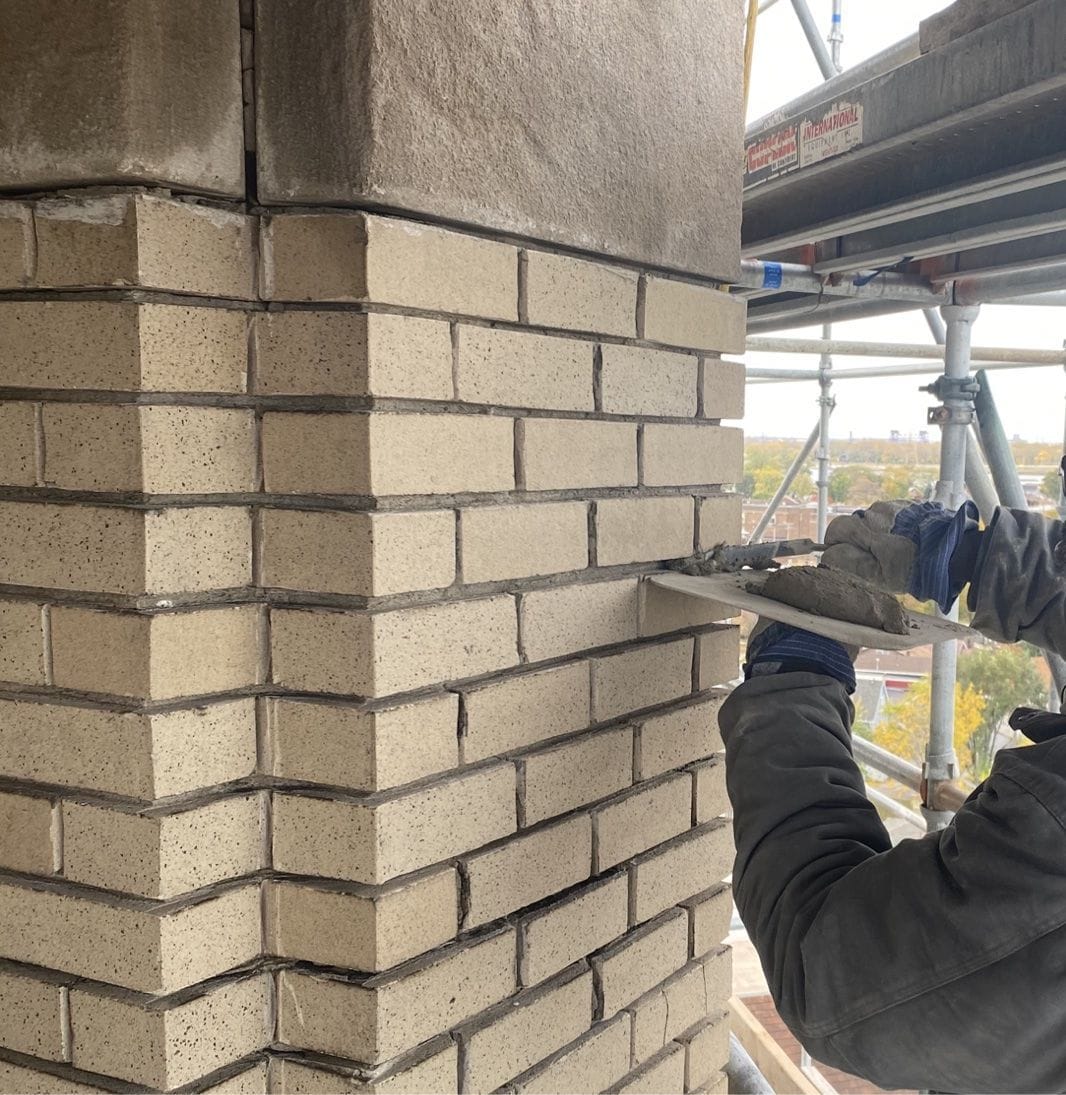
Once cleaned and dust-free, we pack in new mortar in lifts, carefully compressing each pass to eliminate voids. If you want a traditional tuckpointed look, we can use a base mortar that closely matches your existing brick color, then install a fine, contrasting line in the center to mimic very tight joints. For most commercial projects, though, we color-match neighboring mortar so repaired areas blend in rather than stand out.
How We Match Mortar and Brick on Commercial Properties
A big part of commercial tuckpointing and masonry repair is making sure your building does not end up looking patchy. Color mismatch or the wrong mortar type is often what gives repair work a “DIY” appearance. Superior Masonry Ann Arbor spends real time at the start of each job matching your existing materials.
We begin by analyzing your current mortar. For older Ann Arbor structures, especially around downtown and campus, the mortar may be lime-heavy and softer than modern bagged mortars. Using a mortar that is too hard can damage historic brick. For newer commercial strips along Washtenaw, State Street, or the Carpenter Road corridor, we often find higher-strength cement mortars that can handle more load and traffic.
We use sample boards and small on-wall tests to dial in both color and texture. Sand type, joint tooling (like concave, flush, or grapevine), and slight tint adjustments all affect how the finished work reads from the sidewalk. During this stage, we will point out previous bad patches so you can see the difference between rushed repairs and properly matched work.
For masonry repair beyond joints, such as replacing spalled bricks, cracked sills, or failing parapet sections, we source brick and stone that match size, texture, and finish. In many Ann Arbor commercial buildings, the original brick is no longer manufactured, so we create blends and sometimes lightly distress new units to blend them with existing elevations. The goal is always the same: from the street, your customers should not be able to tell where the repair starts and stops.
Common Commercial Masonry Problems We Fix in Ann Arbor
Ann Arbor’s climate creates a specific set of issues for commercial masonry buildings. Freeze–thaw cycles, driving rain from the Great Lakes region, and years of road salt exposure all show up in predictable patterns that Superior Masonry Ann Arbor knows well.
One common problem is parapet wall deterioration at rooflines. Water enters through poorly sealed coping or flashing, then saturates the top course of brick. When winter hits, that moisture freezes and expands, causing bricks to flake or pop (spalling) and mortar to open up. Our repair typically includes removing damaged units, repointing joints below, installing or adjusting proper flashing, and sometimes adding or resetting stone or metal coping to shed water away from the wall.
Another frequent issue is step cracking around window and door openings where lintels have started to rust and swell. This pushes surrounding brick out of alignment. We safely shore the opening, remove the failing lintel, clean and repair the masonry pockets, install correctly sized and coated steel, then rebuild the surrounding brick and repoint all disturbed joints.
At street level, salt and moisture from sidewalks and parking areas attack the first few courses of brick and block. You might see crumbling corners, powdery surfaces, or white streaks. We mechanically remove deteriorated material, replace affected units, and use breathable water repellents that allow moisture inside the wall to escape while reducing future absorption from the exterior.
Inside, you may notice water stains, peeling paint, or musty smells on the interior of exterior walls. These often trace back to failing exterior joints or flashing rather than a simple “roof leak.” By addressing the masonry envelope, we help protect interior finishes, tenant build-outs, and inventory from ongoing moisture damage.
What Drives Cost and Scheduling for Commercial Tuckpointing
Owners and facility managers usually want to know two things right away: how much it will cost and how long their building will be disrupted. Superior Masonry Ann Arbor gives straightforward answers based on a detailed site evaluation, not guesses.
Cost is driven mainly by access, depth and extent of deterioration, and the level of finish required. A single-story storefront on Main Street with easy sidewalk access and light joint repair will be less expensive per square foot than a multi-story office building that requires swing stages, boom lifts, night work, or lane closures. Severely deteriorated joints that need deep grinding and rebuilding cost more than superficial touch-ups, but they also last significantly longer.
Ann Arbor’s weather shapes our work calendar. Mortar work is best performed when daytime temperatures stay above 40°F and nighttime temps do not dip far below freezing. That usually means late March through early November is the prime season. We can work in colder shoulder months with heated enclosures and additives, but that adds to cost and is generally reserved for urgent structural issues or water infiltration that cannot wait.
If you are planning a façade refresh before student move-in, a new tenant opening, or a major inspection, it pays to contact us early in the year to hold your spot. We often stage work around business hours to minimize disruption, setting up containment, safety barricades, and signage so your customers and staff can move safely while we work overhead.
During estimating, we break out pricing by area or elevation so you can prioritize critical repair zones if needed. For example, you may choose to address street-facing façades and heavily exposed parapets first, then schedule rear or less visible walls in a second phase.
Our Process and How to Get Started With Superior Masonry Ann Arbor
We have refined a process that works well for property managers, condo boards, schools, medical facilities, and business owners across Ann Arbor and the surrounding communities.
1) Initial site visit and inspection: We meet on-site, walk the property, document problem areas with photos, and discuss any interior symptoms you have noticed. We pay special attention to high-traffic entries, loading docks, and any prior patchwork to see what has held up and what has failed.
2) Written scope and transparent proposal: You receive a written scope that maps out specific wall sections, parapets, and features to be tuckpointed or rebuilt. We identify any unknowns, such as hidden steel condition, so you understand where contingencies might apply. The proposal includes a rough schedule, access needs, and how we plan to handle dust and noise around your tenants or customers.
3) Scheduling and coordination: Once approved, Superior Masonry Ann Arbor coordinates with your other vendors, such as roofers or painters, to avoid overlap conflicts. If your building is in a busy part of Ann Arbor, we can assist with permitting questions related to sidewalk use or lift placement.
4) Execution and communication: During work, we keep you updated with progress photos and notes, especially when we uncover concealed conditions like deteriorated lintels or hidden voids. Our crews maintain organized work areas, protect glazing and signage, and clean up daily.
5) Final review and maintenance planning: At completion, we perform a walkthrough with you, review what was completed, and discuss a maintenance schedule. In Ann Arbor’s climate, regular visual checks every couple of years can catch joint breakdown early, which keeps future tuckpointing and masonry repair costs lower.
If you are seeing cracking mortar, loose bricks, or water staining on your commercial property, reach out to Superior Masonry Ann Arbor. We can assess whether targeted commercial tuckpointing will solve the problem or if broader masonry repairs are needed, then help you phase the work in a way that fits your budget and operations.