Home › Masonry Restoration and Historic Preservation
Superior Masonry Ann Arbor provides historic masonry restoration in Ann Arbor, MI for older brick and stone buildings that need careful repair. We match historic brick, stone, and mortar, rebuild failing sections, and restore decorative details while protecting original fabric. Our team respects preservation standards while stabilizing and beautifying landmark properties.
Superior Masonry Ann Arbor provides professional historic masonry restoration throughout Ann Arbor, MI, Michigan and the surrounding area. Our licensed, insured crew delivers safe, clean, on-time work with a free estimate before anything begins. Call (734) 887-9416 or request your free quote.
Historic Masonry Restoration in Ann Arbor, Done the Right Way
Historic masonry restoration is not the same as new brickwork. It is slow, methodical work that has to respect what is already there. At Superior Masonry Ann Arbor, we focus on saving as much original material as possible while making the structure safe, dry, and functional for decades.
In Ann Arbor and surrounding Washtenaw County, most historic masonry issues come from moisture movement, freeze-thaw cycles, salt exposure along sidewalks and roads, and past repairs that used the wrong materials. Chimneys start to lean, basement stone walls flake and shed sand, and brick facades show step cracking or bowing. Our first priority on any historic masonry restoration project is to find out what is really causing the damage, not just cover it up.
We commonly work on early 1900s brick homes near downtown, older farmhouses with fieldstone foundations in the townships, and institutional buildings with decorative brick detailing. For each type, the approach is different. A soft, hand-pressed brick in the Old West Side neighborhood cannot be treated like modern, high-fired brick in a newer subdivision. Superior Masonry Ann Arbor builds the method around the building, not the other way around.
Inspection, Documentation, and Planning Before Any Tool Touches the Wall
A proper historic masonry restoration project in Ann Arbor starts with a detailed site visit. We walk every accessible side of the structure, look at rooflines, gutters, grading, and nearby trees, and check for water paths that might be feeding the problem. We photograph and mark problem areas, such as bulged brick, spalled faces, missing mortar, or open joints at window and door heads.
Next, we look closely at the existing masonry. We note brick size, color variation, texture, bond pattern, and joint style. For stone, we look at type of stone (such as local fieldstone, limestone, or sandstone), typical sizes in each course, and how much face has already weathered away. On older Ann Arbor homes, mortar from the late 1800s and early 1900s is usually lime rich and softer, often with visible sand grains that match the Huron River valley.
When the project calls for it, we take small mortar samples for lab or field analysis. This helps us match hardness and composition, so the new mortar will be slightly softer than the brick or stone. That balance is critical. If the mortar is too strong, the next freeze-thaw cycle can pop faces off historic brick. Superior Masonry Ann Arbor creates a written scope that details the areas to be restored, the materials to be used, and the sequence of work, so owners know exactly what is planned before we begin.
Repointing and Mortar Matching for Historic Brick and Stone
The most common need in historic masonry restoration is repointing. This is the controlled removal and replacement of deteriorated mortar joints. In older Ann Arbor homes, previous repairs often used modern Portland-heavy mortar that is harder than the original masonry. One of our core services is carefully removing those inappropriate repairs and replacing them with compatible lime-based mortars.
We start by cutting or raking out old mortar to a proper depth, usually 2 to 2.5 times the joint width, using hand tools or low-vibration power tools with vacuum collection to limit dust. We avoid damaging the arris, or corner edge, of the brick or stone. Joints are then brushed clean and lightly dampened so the new mortar bonds well and does not dry out too fast.
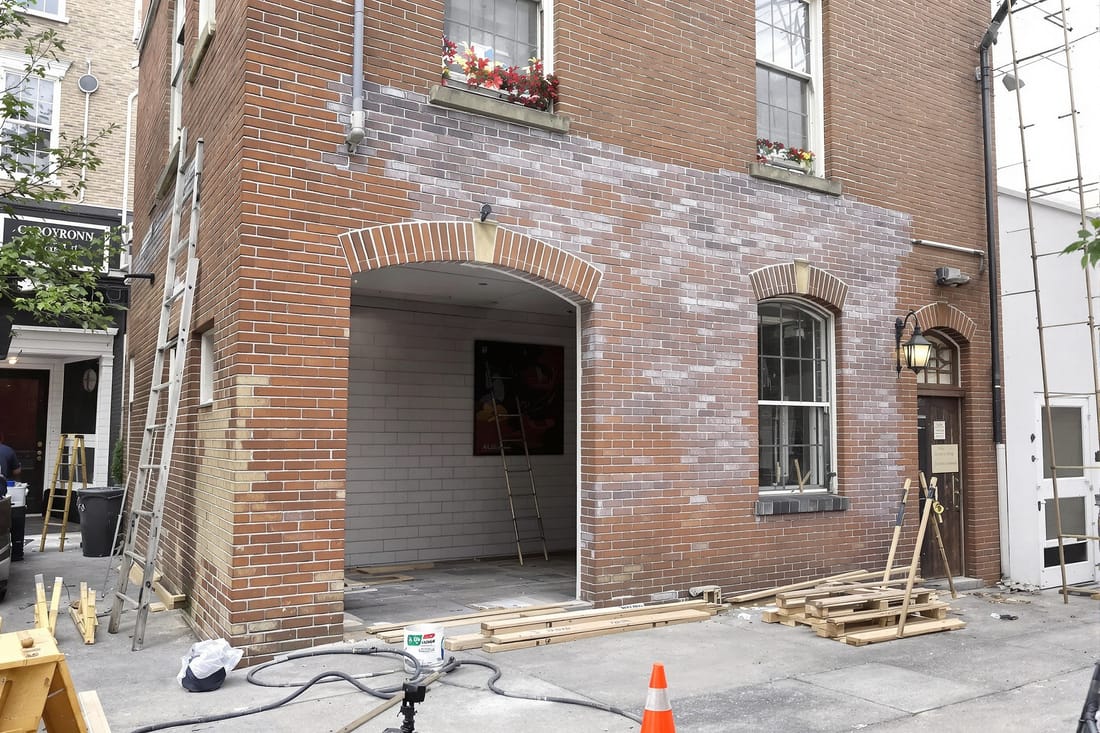
For historic work, we custom blend mortar to match color, texture, and tooling. We adjust sand gradation and pigment to blend with the existing wall, then tool the joints to copy the original style, such as concave, flush, or slightly recessed. On many older Ann Arbor facades, the joints are wider and not as uniform as modern work, so we follow the original irregularities rather than forcing a new look. After curing, the new pointing should visually disappear, not stand out as a patch.
Brick, Stone, and Chimney Repairs That Respect Original Construction
Historic masonry restoration often involves more than repointing. Superior Masonry Ann Arbor regularly rebuilds damaged brick sections, repairs chimneys, and stabilizes old stone foundations using methods that keep as much of the original material as possible.
For brick repair, we carefully remove only the units that have fully failed or lost structural value. We then source replacement brick that matches the size and firing style as closely as the market allows. In Ann Arbor, exact matches are difficult for pre-war brick, so we may blend salvaged brick across a wider area so the repair looks intentional rather than like a patch. Brick is laid to match the original bond pattern, whether running bond, Flemish, or decorative banding.
Stone foundation and basement wall repairs are common in older homes north and west of downtown. Mortar joints may have eroded so much that stones wobble or shift. We re-bed loose stones in fresh, compatible mortar, pack back joints fully, and correct bulges in small increments so we are not stressing the whole wall at once. Where needed, we coordinate with structural engineers to design discreet support, such as interior piers or beams that work with the existing foundation instead of fighting it.
For chimneys, we address the entire system, not just the visible brick above the roof. This can include new crowns with proper drip edges, flue liner repairs, flashing replacement, and repointing down to the roof deck. Historic chimney rebuilds may involve recreating corbelled tops or decorative details that match the original profile based on old photos or surviving sections.
Cleaning, Sealing, and Preventing Future Masonry Damage
True historic masonry restoration includes preventing the same damage from returning. In Ann Arbor, this means managing water, salts, and temperature swings. Superior Masonry Ann Arbor evaluates roof drainage, gutter discharge, and grading as part of every project, then makes practical recommendations that match the building and budget.
For cleaning historic masonry, we avoid harsh methods that remove the fired surface or patina. In most cases we use low-pressure water washing combined with masonry-safe detergents or specialty cleaners chosen for the actual stain, such as biological growth, atmospheric soot, or mineral deposits. We test small areas first so we do not permanently alter the brick or stone appearance. Sandblasting historic masonry is almost never appropriate in this region because it opens the surface and accelerates future decay.
We are careful with sealers. Many older buildings in Ann Arbor were damaged in the past by non-breathable coatings or paints that trapped moisture in the wall. When a water repellent is needed, we use breathable, penetrating treatments selected for historic masonry that allow vapor to exit while reducing bulk water absorption. In some cases, the best solution is to improve flashing, caps, and drainage and avoid sealers entirely.
We also talk frankly about maintenance intervals. Historic masonry does not become maintenance free. A realistic plan might include visual checks every year, simple repointing in vulnerable spots every decade or so, and cleaning only as needed. Our goal is to help owners plan work so they are not surprised by larger failures later.
Costs, Schedules, and What Ann Arbor Owners Should Ask Before Hiring
Historic masonry restoration and preservation costs are driven by access, detail level, and how much original material can be kept. A small repointing project on a single elevation might be straightforward, while a full facade restoration in a tight downtown Ann Arbor location with scaffolding and traffic control is more involved. Decorative brickwork, carved stone, and chimney tops with multiple flues all add to the labor hours required.
At Superior Masonry Ann Arbor, we provide written estimates that break out major components, such as repointing, unit replacement, chimney work, cleaning, and any coordination with other trades. This helps owners decide what to prioritize if the ideal scope does not match the current budget. We can also phase work over several seasons, beginning with the most vulnerable areas, such as chimneys, parapets, or walls that are actively leaking.
Before you hire anyone for historic masonry restoration in Michigan, ask specific questions. What type of mortar will you use and why. How will you protect original brick or stone edges when removing old joints. Have you worked on homes or buildings from the same era as mine in Ann Arbor or nearby towns. Can you show examples where new pointing blends in after weathering. The answers will tell you quickly whether the contractor actually understands preservation work.
Our crews are local, so we work within Ann Arbor’s weather window and understand how the local building department and historic district guidelines affect scheduling and methods. We do not rush late-season work if temperatures will not allow mortar to cure properly. The priority is a durable result, not just hitting a date. When you are ready to talk about your project, we can walk the property with you, explain what really needs attention, and give you options based on how long you plan to own or occupy the building.